Uncategorized

Importance of Backlinks in SEO and Future

What are Backlinks and why they matter in SEO and will they matter in future?

More useful for the beginners in Digital Marketing.

Still, you’ve presumably heard people say “Backlinks are important” again and again, if you’re new to SEO or digital marketing. But what exactly are backlinks? Why do they count so important? And with AI and new Google updates, are backlinks still applicable for the future?

Let’s break it all down in simple, easy-to-understand language, without specialized confusion.

What Are Backlinks? 

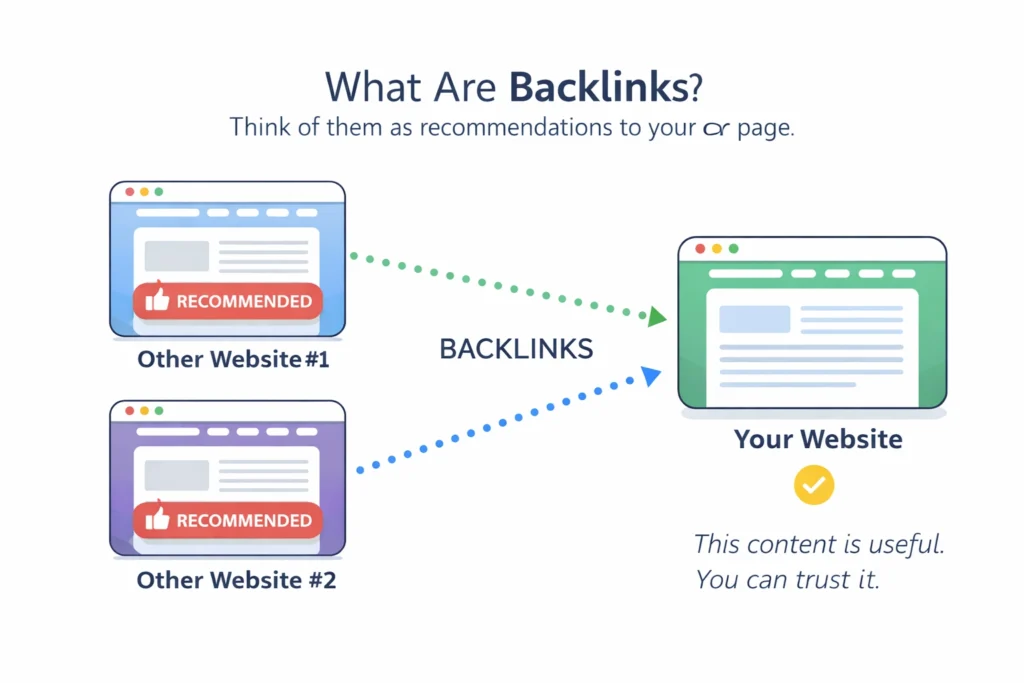
A backlink is a link from one website to another.
Think of backlinks like recommendations.
If one website links to your point, it’s like saying:

“This content is useful. You can trust it.”

For Illustration

  • You write a helpful composition

  • Another website links to your composition

  • That link becomes a backlink for your point

Hunt machines see this as a signal of trust. The further genuine recommendations you get, the more confident hunt machines feel about showing your website to druggies.

But here’s the important part:

  • Not all backlinks are equal

  • One quality backlink is frequently better than ten low-quality bones
seo-explained

Why Do Backlinks Matter in SEO?

Backlinks are one of the strongest ranking factors in SEO. Then’s why they count so important:

🔹 They Help Ameliorate Hunt Rankings

Hunt machines use backlinks to understand which websites are secure. Websites with quality backlinks generally rank advanced.

🔹 They Help Google Discover Your Runners Faster

When other websites link to your content, hunt machine bots can find and indicator your runners more snappily.

🔹 They Make Website Authority

Over time, backlinks help make your point’s credibility and authority in your niche.

🔹 They Bring Real Callers

Backlinks do n’t just help SEO. They can also shoot factual people to your website from other platforms.

Different Types of Backlinks You Should Know

Understanding backlink types helps you avoid miscalculations and make links safely.

DoFollow Backlinks

These links pass SEO value and help ameliorate rankings. Utmost people aim for these.

NoFollow Backlinks

These do n’t pass direct SEO value, but they’re still useful for business and making your backlink profile look natural.

Editorial Backlinks

These are the stylish kind. You earn them naturally when someone links to your content because it’s authentically helpful.

Guest Post Backlinks

These come from writing papers for other websites and adding a link back to your point.

How to Make Backlinks Safely (Beginner-Friendly Tips)

If you’re just starting out, concentrate on safe and ethical styles:

  • Create helpful, original content

  • Write guest posts for applicable websites

  • Publish papers on trusted platforms

  • Use ingrained links rather of keyword-heavy anchors

  • Be patient and harmonious

 Avoid Lanes Like

  • Buying backlinks

  • Using spammy directories

  • Copy-pasting the same composition far and wide

These may look tempting but can harm your point in the long run.

Are Backlinks Getting Replaced in the Future?
future-backlink-digital-marketer-in-trivandrum

This is a veritably common question moment.

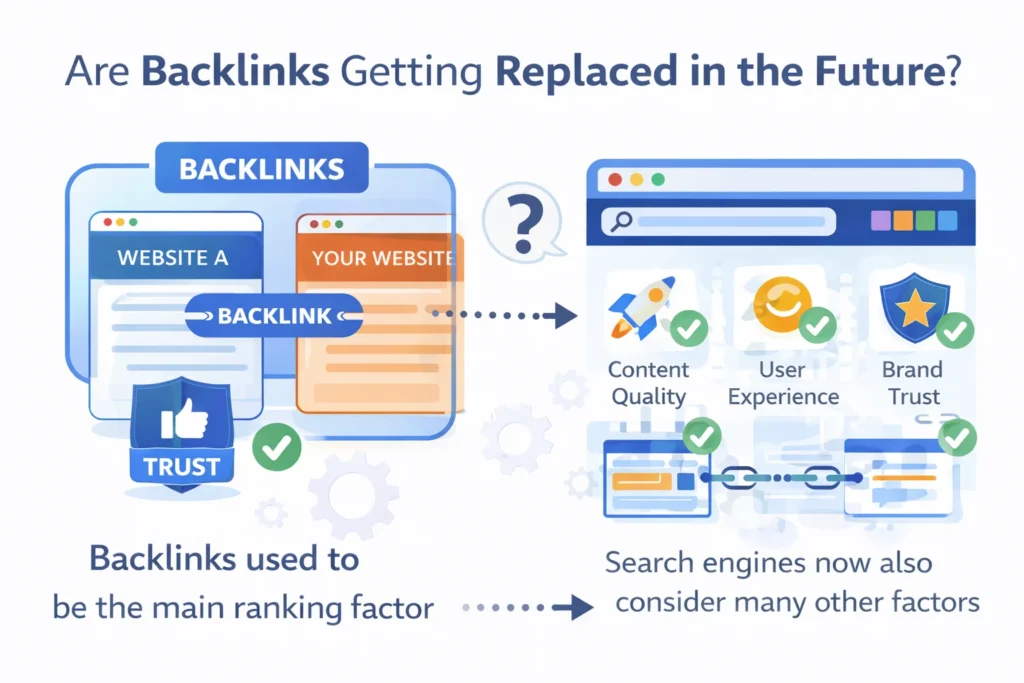
  • The simple answer is No, backlinks are n’t fading

  • But yes, they’re evolving

Hunt machines are now smarter and also consider:

  • Content quality

  • Stoner experience

  • Brand trust

  • Applicability and environment

Before, SEO was about how numerous backlinks you had.
Now, it’s about how good those backlinks are.

In the future, backlinks will continue to count, but only when they are:

  • Natural

  • Applicable

  • Contextual

  • Earned through value

So rather of fussing about reserves, concentrate on earning trust.


Common Backlink Miscalculations Newcomers Should Avoid

Numerous newcomers intentionally hurt their SEO by making these miscalculations:

  • Using the same keyword anchor textbook far and wide

  • Buying cheap backlinks

  • Getting links from unconnected websites

  • Submitting the same composition without rewriting

SEO prices tolerance and quality, not lanes.


Conclusion

Backlinks remain one of the most important corridors of SEO, and they will continue to count in the future. While hunt machines are evolving, backlinks still act as strong signals of trust and credibility.

The key is n’t to chase backlinks blindly, but to concentrate on quality content and natural link structure. When you do that, backlinks will come naturally over time.

Still, if you’re a freshman and want to learn SEO generalities in a simple and practical way, you can explore further coffers on Ajaikrishnan.com, where digital marketing motifs are explained easily for learners.
GEO

How Generative Engine Optimization (GEO) is Changing the Game in Digital Marketing

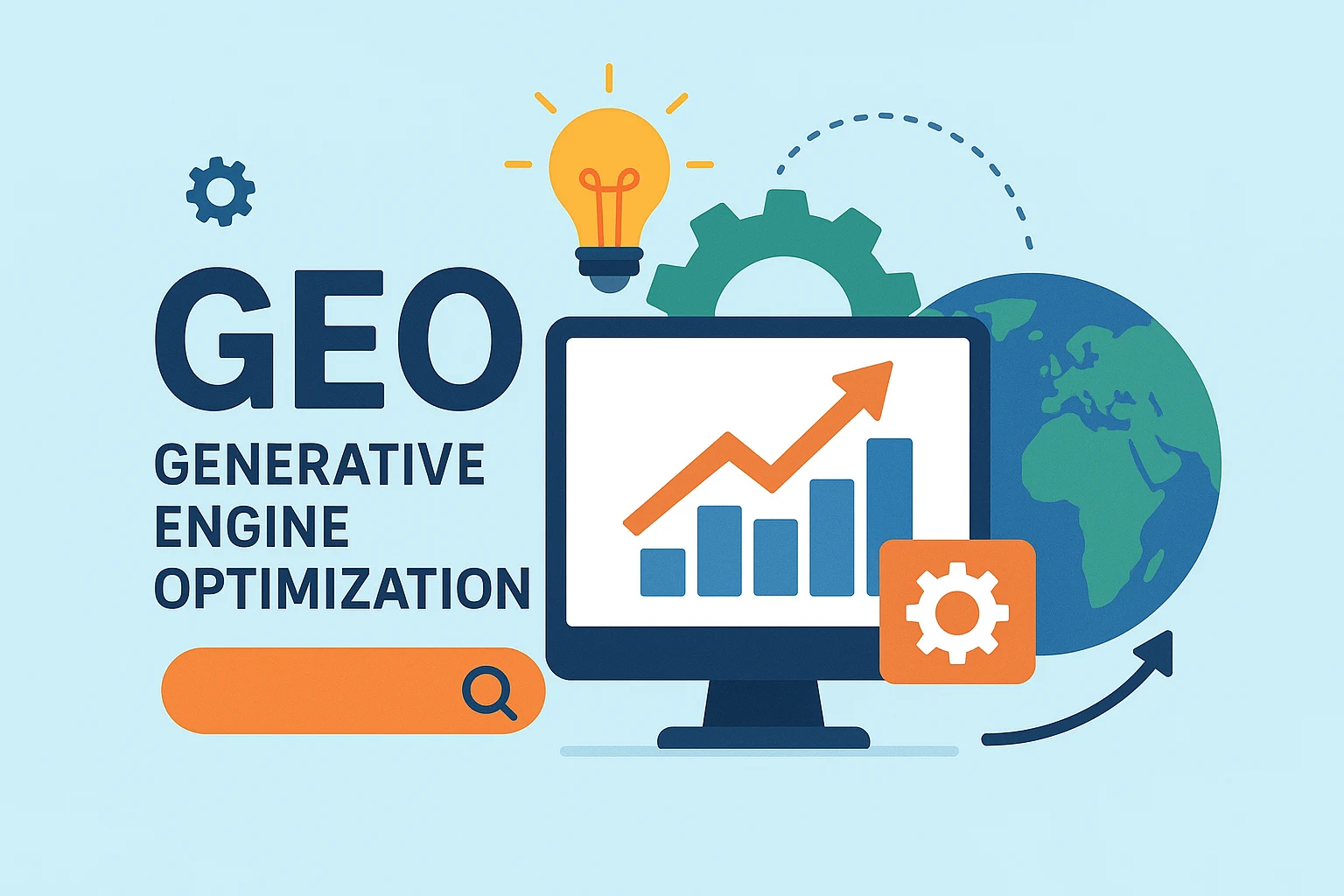
Let’s be honest: digital marketing is evolving faster than ever, thanks to the rise of artificial intelligence (AI). If you’re still relying solely on traditional SEO tactics—stuff like keyword stuffing and backlinks—you might be missing out. That’s where Generative Engine Optimization, or GEO, steps in. It’s a fresh way to make sure your content gets noticed by AI-powered search engines like ChatGPT and Google’s AI.

What Exactly is Generative Engine Optimization (GEO)?

Think of GEO as the art of speaking AI’s language. Instead of crafting content just to rank for certain keywords, GEO is about creating content that AI understands, loves, and picks to include in its smart, conversational search answers. The goal is to make your website’s content feel like a friendly expert answering a user’s question—clear, natural, and packed with helpful details.

Why Should You Care About GEO?

AI isn’t just throwing links at users anymore—it’s giving them thoughtful, conversational responses. GEO helps your content stand out in this new world by:

  • Making your content more visible to AI engines by matching how they process and generate answers.

  • Engaging your audience with content that’s easy to read and feels like a real conversation.

  • Increasing your chances of being the “go-to” answer featured in those nifty AI snippets that drive lots of traffic.

How Can You Use GEO to Rank Higher in Search Results?

Here’s the cool part: you don’t need to be a tech genius to get started with GEO. Just follow these friendly tips:

  1. Write Like You’re Talking to a Friend
    Skip the jargon and write naturally. Imagine explaining your topic to a curious friend—just casual, clear, and helpful.

  2. Add Structured Data (It’s Not as Scary as It Sounds)
    Use simple tags and metadata that help AI understand exactly what your page is about. It’s like giving AI a roadmap to your content.

  3. Cover the Topic Inside and Out
    Don’t just answer the main question. Include related info and details that help build a fuller picture. AI loves content that’s thoughtful and complete.

  4. Understand What Your Audience Really Wants
    Focus on the reasons behind the search queries. Create content that hits those intent points, whether users want to learn, buy, or explore.

  5. Keep Things Fresh
    Regularly update your content to stay ahead. AI prefers the latest, most accurate information to share.

AEO

AEO (Answer Engine Optimization)

digital-marketer-in-trivandrum-aeo

AEO: The Next Evolution of SEO

The world of digital marketing is evolving rapidly, and Answer Engine Optimization (AEO) is emerging as the next major shift beyond traditional Search Engine Optimization (SEO). As AI-powered search engines and voice assistants become the new norm, marketers must understand AEO and how it differs from SEO to stay competitive.

What is AEO ?

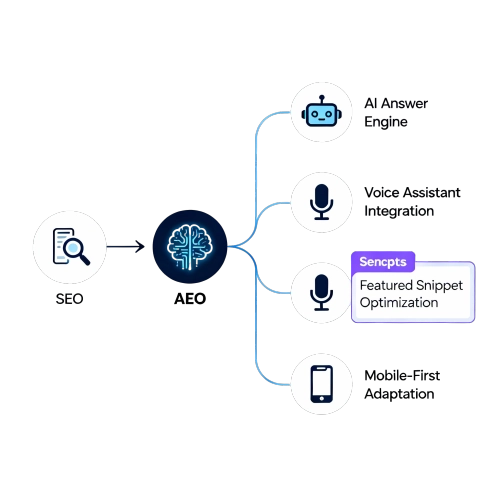
AEO refers to optimizing content specifically to provide direct, concise answers to user queries on AI-driven platforms, voice assistants, and search engines that prioritize quick answers. Unlike SEO, which focuses on ranking web pages in search results, AEO aims to appear in featured snippets, knowledge panels, voice responses, and AI-powered answer generators like ChatGPT or Microsoft Copilot.

How Is AEO Different from SEO?

SEO has been the dominant practice for decades, aiming to improve a website’s ranking on traditional search engines like Google and Bing. It focuses on optimizing websites to rank well for relevant keywords by using tactics like keyword targeting, backlinks, content optimization, and technical improvements. The primary goal of SEO is to attract visitors to a website through improved rankings and increase organic traffic.

AEO, on the other hand, is a newer strategy that has emerged in response to changes in how people search and interact with information. It focuses on optimizing content to provide direct, concise answers to user queries through AI-powered platforms such as ChatGPT, Microsoft Copilot, Google AI Overviews, and voice assistants. Unlike SEO, which drives users to a website, AEO aims to have content featured directly in answer boxes, featured snippets, voice search responses, and AI-generated summaries — often without the user needing to click through to the site.

In terms of content style, SEO favors long-form, keyword-rich, and comprehensive pages that cover topics in detail. AEO prioritizes structured, short, easy-to-scan answers formatted for featured snippets and voice queries, often in a conversational tone.

While SEO targets traditional text-based searches on desktop and mobile search engines, AEO targets conversational and voice-based queries on AI chatbots and voice assistants.

Together, SEO and AEO complement each other—where SEO drives traffic and conversions on websites, AEO increases brand authority and visibility in direct answer results, enhancing overall reach in the evolving digital search ecosystem.

Uses of AEO Compared to SEO

  • AEO optimizes content for AI assistants, zero-click answers, voice search, and featured snippets. It boosts brand authority by being the direct answer source.

  • SEO focuses on optimizing for search engine algorithms, backlink profiles, keyword rankings, and driving site traffic for conversions.

  • Combining AEO with SEO improves both direct visibility in AI-generated responses and organic traffic through search engine rankings.

Will AEO Completely Take Over SEO?

AEO is not set to replace SEO but rather to complement it. SEO remains essential for driving organic traffic and converting visitors once they land on your website. AEO enhances this by improving how your content is surfaced to users through voice search, AI chatbots, and rich search features.

In the coming years, marketers should integrate AEO within their SEO strategies to future-proof their digital presence. The convergence of AI and search means a hybrid approach—leveraging both ranking and answering—is the best way forward.

Seo in 2026

SEO in 2026: How Voice and Visual Search Are Changing the Game

digital-marketer-in-trivandrum-blogs-dm-in-2026-picture
SEO in 2026 How Voice and Visual Search Are Changing the Game

Voice and visual hunt are no longer futuristic generalities they are essential corridor of how people find information moment. As these technologies grow, SEO strategies must evolve to meet druggies where they’re and how they search. Then’s a friendly companion on what changes to anticipate and how to prepare your SEO for the voice- and visual-first world of 2026.

Speak Their Language Embrace Natural, Conversational Queries

People talk else than they class. When using voice hunt, queries sound more like everyday discussion — full rulings and questions. rather of “ coffee shop NYC, ” someone might ask, “ Hey, where’s the stylish coffee shop hard? ” Your content needs to reflect that natural way of speaking by using conversational language and answering common questions easily and directly.

Go Long and Specific Focus on Detailed, Question- Grounded Keywords

To catch voice hunt business, use long- tail keywords that mimic how people ask questions. suppose about all the “ who, ” “ what, ” “ when, ” “ where, ” “ why, ” and “ how ” expressions your followership might use. This approach makes your content more applicable to voice sidekicks that seek to give precise answers rather than a list of links.

Be the Answer Optimize for Featured particles and Quick Responses

Voice sidekicks frequently pull answers from featured particles on hunt machines. Structure your content to deliver terse, straightforward information that Google can snare fluently — suppose pellet points, short paragraphs, and FAQ sections. Be the source that voice quests are happy to quote out loud.

Put Local First Mobile benevolence and Original SEO Are Vital

Utmost voice quests be on mobile bias and frequently have original intent. icing your website works seamlessly on phones and optimizing for original SEO by streamlining Google Business Profile, bedding charts, and using localized language can make your brand easier to find “ near me. ”

Picture Perfect Enhance Images for Visual Hunt

Visual hunt is roaring with technologies that let druggies search with prints or screenshots. Make sure every image on your point is high- quality, applicable, and completely described. Use clear filenames and rich alt textbook so visual hunt machines understand what your images show and can recommend them to druggies.

Speak Through Your Images

Use Structured Data and Metadata Structured data and metadata are like a visual chart for hunt machines. Adding schema luxury to your images and runners helps search machines make sense of your visual content, adding the chances it appears in visual hunt results. This specialized step makes a huge difference in being discovered through images.


Think Multi-Modal: Connect Text, Voice, and Visuals Seamlessly

Many users combine voice and visual inputs when searching. A user might ask a question out loud and want to see images or videos for answers. Your SEO should ensure your text, images, and videos tell a consistent story, giving users a smooth, engaging experience—no matter how they choose to search.

Scroll to Top